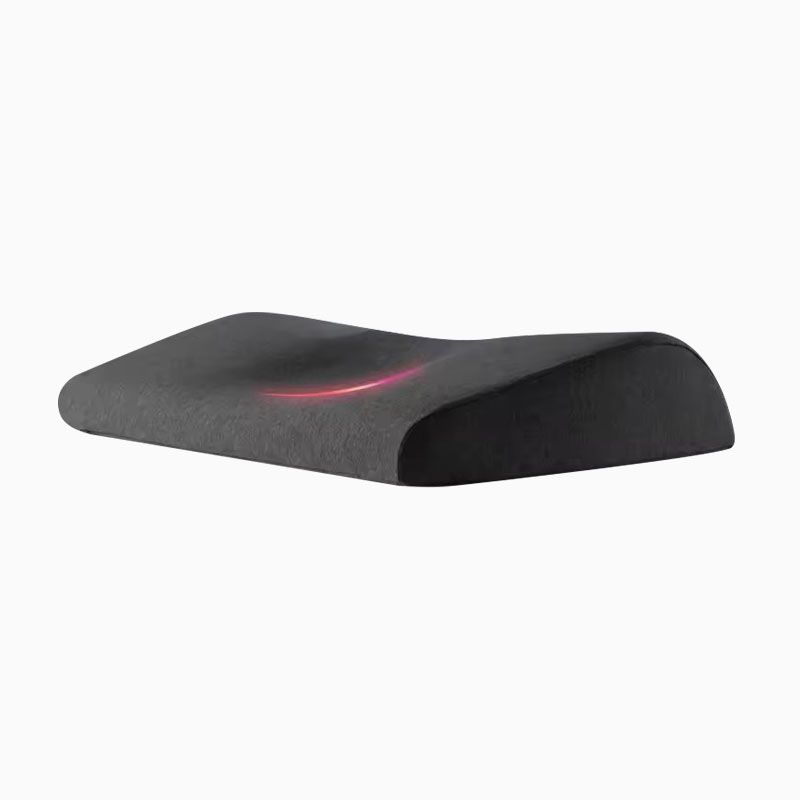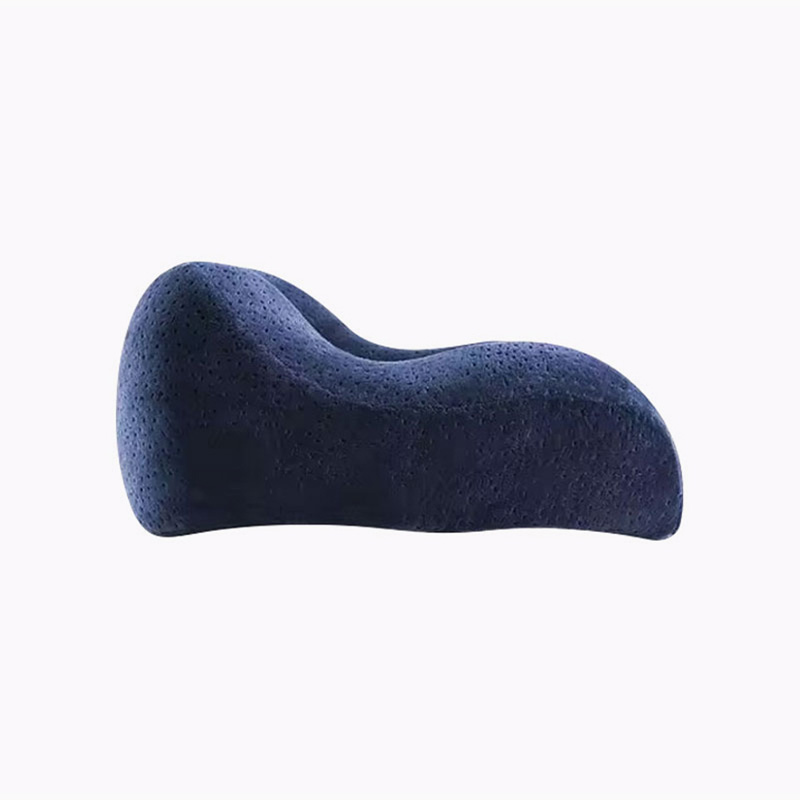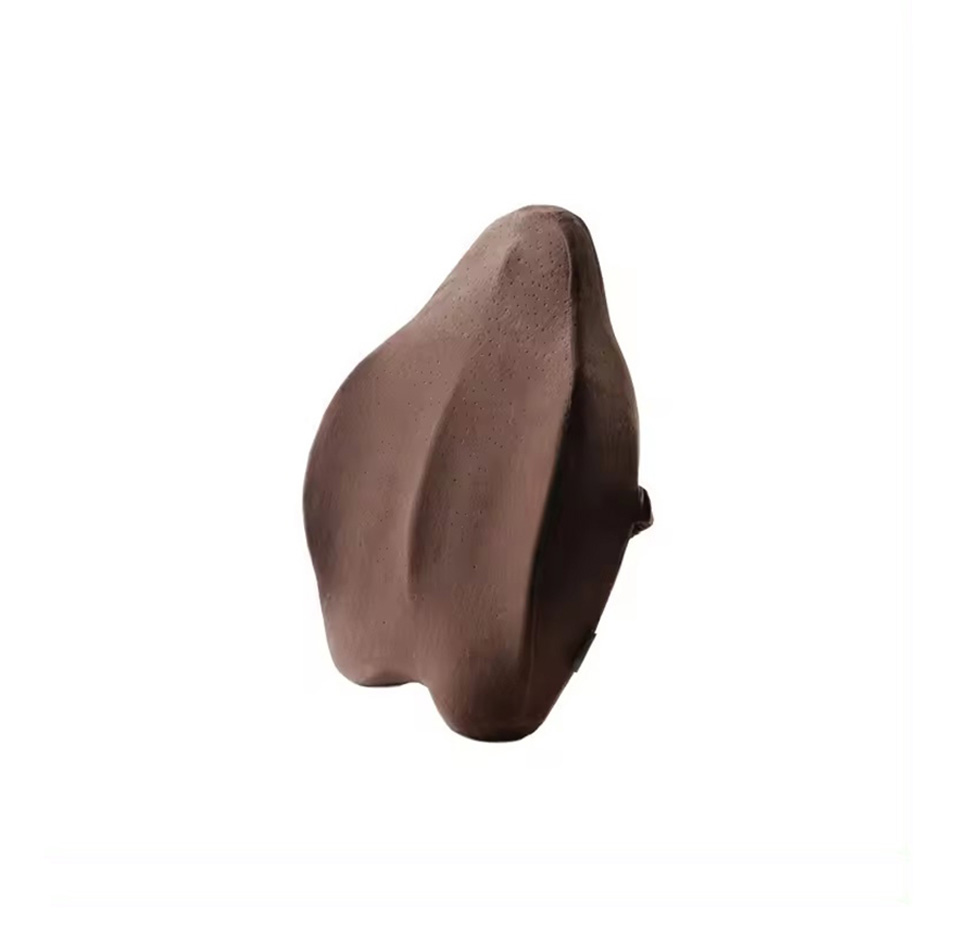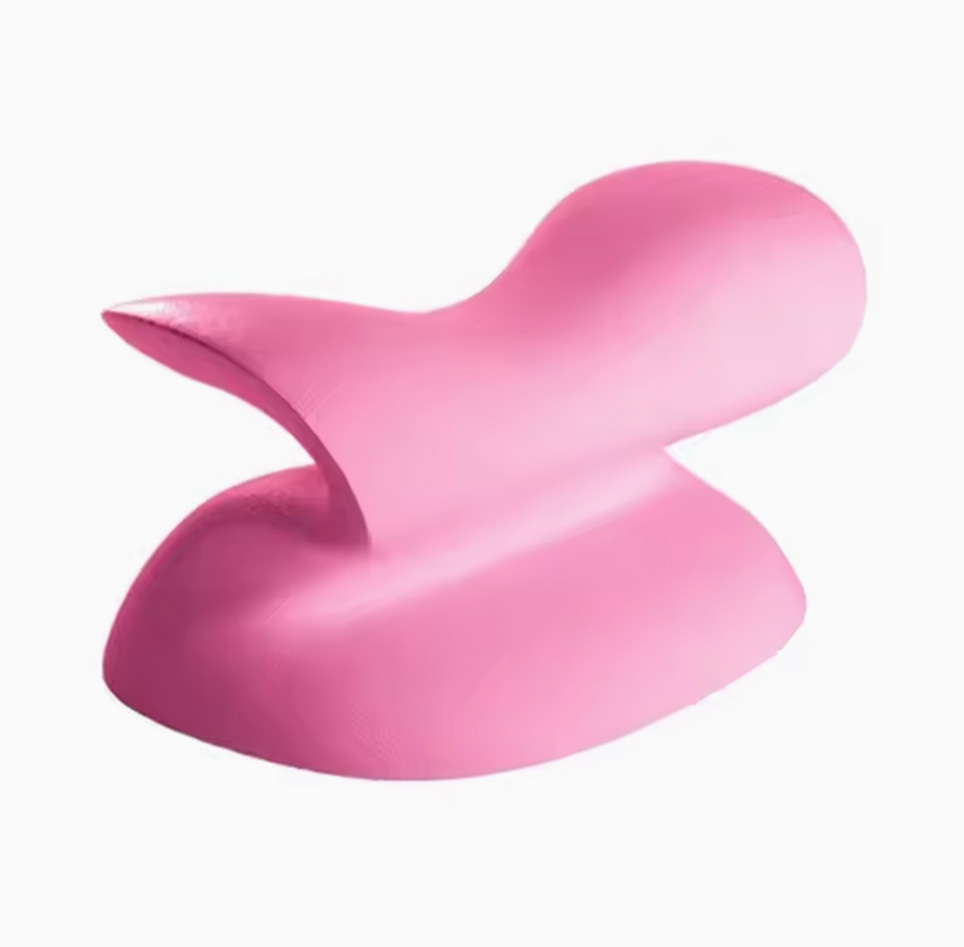
Memory Foam Pillows: Are They Good or Bad? Pros, Cons, and Buying Tips
Last month, a customer sent us a photo of her brand-new memory foam pillow. After two weeks, the center had developed a permanent hollow, and she was waking up with a stiff neck. She asked the question many people ask: is memory foam actually good, or is it just marketing?
The honest answer is that memory foam pillows are good when the density, hardness, and loft match your body and sleeping position. They are bad when the foam is too soft, too thick, or simply poor quality. The label "memory foam" does not guarantee comfort; it only describes a material. The same material can be excellent in one pillow and uncomfortable in another.
What memory foam pillows are actually made of
Memory foam is a type of polyurethane foam modified with viscosity-changing additives. It compresses slowly under pressure and returns slowly when the pressure is released. That slow return is the "memory" feel people recognize.
Three numbers tell you more about a pillow than any marketing claim: density, hardness, and rebound time. Density is measured in kilograms per cubic meter. Hardness is measured as ILD, the force required to indent the foam. Rebound time is how many seconds a compressed sample takes to recover.
| Specification | Typical range | What it means for you |
|---|---|---|
| Density | 35D to 60D (kg/m³) | Higher density means more material, better durability, and firmer base support. 40D is acceptable for a pillow, 50D is a comfortable quality level, and below 35D tends to lose support quickly. |
| Hardness (ILD) | 8 to 25 lbs | Lower ILD feels softer and lets the head sink deeper. Heavier sleepers and side sleepers usually need ILD 15 to 25. |
| Rebound time | 1 to 7 seconds | 3 to 5 seconds is the classic slow rebound feel. 1 to 2 seconds feels more responsive and easier to move across. |
| Cell structure | Open-cell or closed-cell | Open-cell foam allows more airflow and reduces heat buildup. Closed-cell foam is denser but traps body heat. |
What does this mean when you shop? A pillow that feels soft in the store can be either a low-density soft foam or a high-density foam with a low hardness rating. The first type fails quickly. The second one supports you for years.
The good: what memory foam pillows do well
What memory foam does better than most other pillow materials is pressure distribution. When you lie on a fiber or feather pillow, your head rests on a small contact area. Memory foam deforms point by point and spreads the load across a wide surface. This lowers the peak pressure on the neck, jaw, and shoulders, which is why many side sleepers feel immediate relief.
Spinal alignment follows from correct loft. A memory foam pillow that matches your sleeping position fills the gap between the head and the mattress, keeping the cervical spine neutral. Back sleepers need medium loft, side sleepers need higher loft, and stomach sleepers need very low loft. Get this one number right and the pillow works as intended.
Memory foam also resists dust mites. The dense structure leaves little space for mites, and most quality covers can be removed and washed. For allergy-prone sleepers, this is a real advantage over feather and down.
Finally, consistency. Memory foam does not shift, clump, or need fluffing. It returns to the same shape night after night. But this only applies when the foam density is sufficient. A low-density pillow starts out the same way and then slowly collapses underneath you.
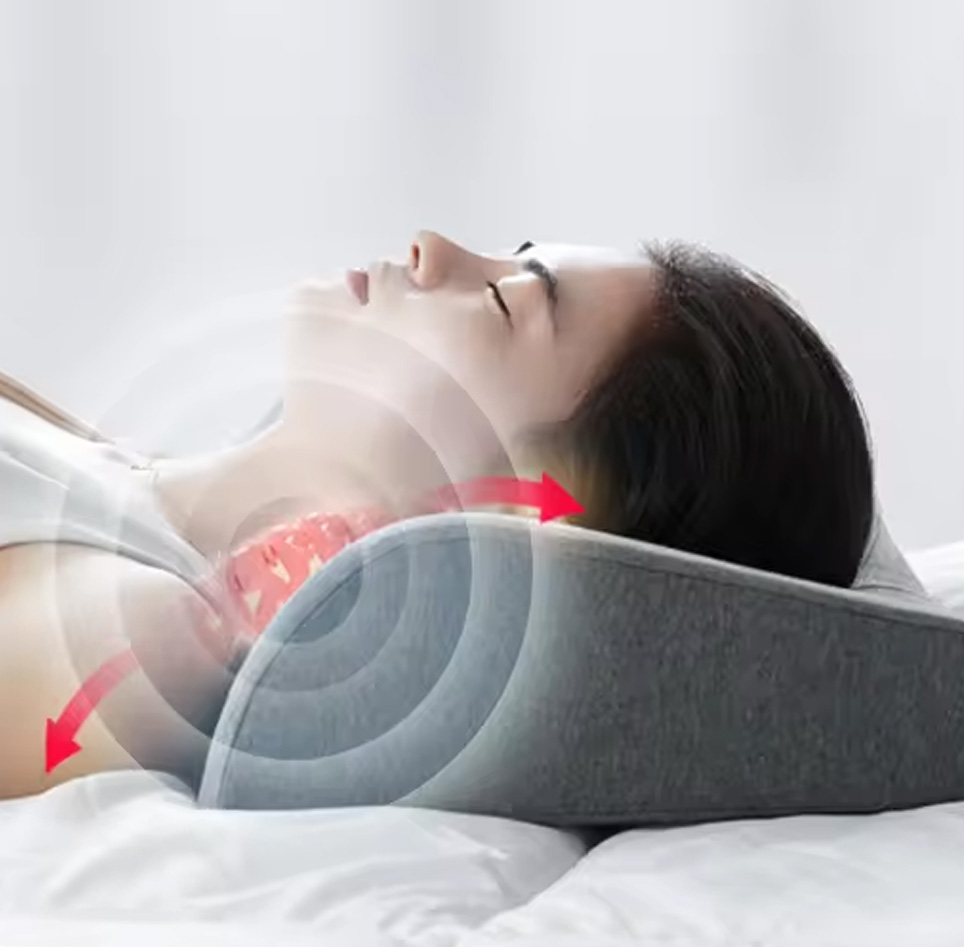 Bravo Memory Foam Orthopedic Sleeping PillowsDescription: Bravo Memory Foam Pillow for Bed Orthopedic Sleeping Pillows Cervical Bedding Pillow for Neck Pain for Side SleepersView Product →
The bad: the real downsides of memory foam
Heat retention is the first genuine downside. Memory foam is a polymer with limited air flow. In a thick pillow, body heat can accumulate, and warm sleepers may wake up sweating. Open-cell foams are better, closed-cell foams are worse, and the cover fabric decides a large part of the sleeping temperature. This complaint is real, but it is manageable with cooling constructions and breathable covers.
Off-gassing is the second concern. New memory foam releases a small amount of volatile organic compounds during the first days. The typical plastic-like odor usually fades within a week if the pillow is aired out. Quality manufacturers use certified low-emission raw materials, which reduces the smell significantly. We recommend unwrapping a new pillow and letting it air for 24 hours before the first use.
Temperature sensitivity is the third issue. Below about 18°C, memory foam stiffens noticeably. In winter, a pillow can feel hard for the first minutes until body heat softens it. This is a physical property of the material, not a production defect.
Cleaning is the fourth issue. The foam core cannot be machine washed. Water damages the cell structure and drying takes days. Only the cover can be washed; the foam should be spot cleaned and aired out.
The fifth issue matters most in the long run: durability depends on density. A cheap pillow around 35D can develop a permanent hollow in 8 to 12 months. Once that happens, the neck no longer receives even support, and pain follows. When people say "memory foam is bad", they are usually describing this experience with a low-density product.
Density and hardness: two numbers that decide everything
People often confuse density with firmness. Density is how much material is packed into a volume. Firmness, or ILD, is how hard the surface feels. A high-density foam can be soft, and a low-density foam can be firm. You need both numbers to predict how a pillow behaves.
For a durable pillow, we recommend at least 45D density. At 50D, the foam lasts longer and keeps its shape under repeated compression. Below 40D, the pillow body may soften and sag in the center within a year.
Expected useful life of memory foam pillows by density
Hardness should match your body size and sleeping position. Lighter sleepers can enjoy an ILD around 10 to 15. Heavier sleepers need an ILD of 18 to 25 so the head does not sink through the pillow. We explain this relationship in more detail in our detailed comparison of density and hardness in memory foam pillows.
Find the right loft for your sleeping position
Sleeping position decides the loft you need. Loft is the height of the pillow when it lies flat. A pillow that is 2 cm too high or too low can cause neck strain, because the head is pushed out of line with the spine.
| Sleeping position | Recommended loft | What happens if it is wrong |
|---|---|---|
| Back sleeper | 10 to 13 cm, medium firmness | Too high pushes the chin toward the chest; too low lets the head tilt backward. |
| Side sleeper | 12 to 16 cm, medium to firm | The pillow must fill the space between the ear and the shoulder. Too low causes the head to drop and shoulder strain. |
| Stomach sleeper | 5 to 8 cm, soft | A thick pillow forces the neck into an awkward extended angle. |
| Combination sleeper | 8 to 12 cm, contoured shape | Changing positions needs a lower loft so you can move from back to side easily. |
Body weight also changes the picture. A heavier sleeper compresses the foam more, so the effective loft is lower than the label suggests. If you weigh above 85 kg, choose the higher end of the loft range and a firmer ILD. If you weigh below 55 kg, the lower end is usually enough.
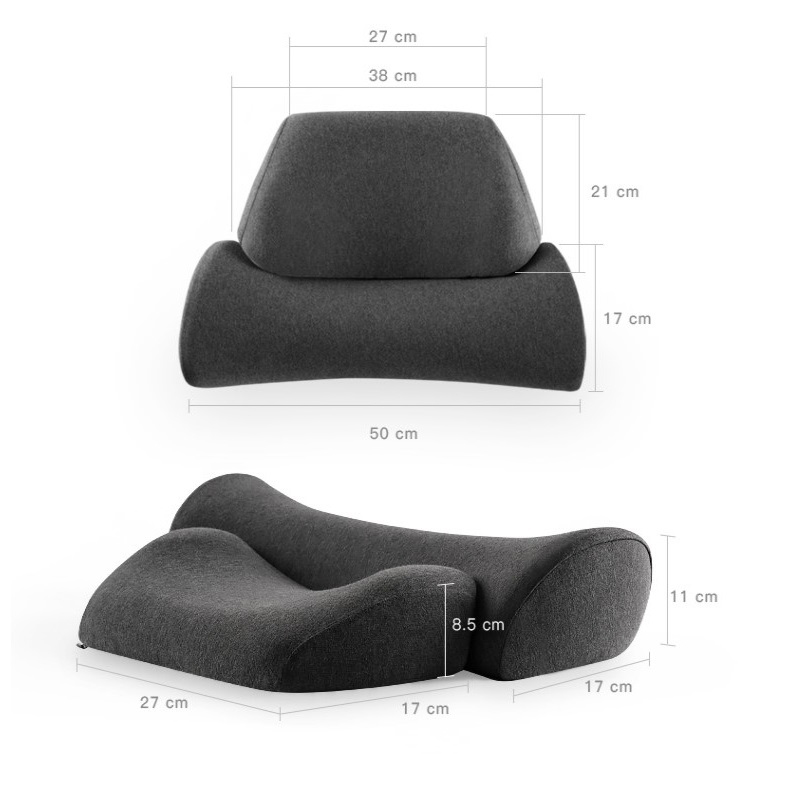 Side Sleep Butterfly Memory Foam Ergonomic Cervical PillowDescription: Side Sleep Butterfly Cervical Pillow Memory Foam Pillows for Neck Pain Ergonomic Memory PillowsView Product →
How modern memory foam reduces heat and odor
Modern memory foam is no longer just a solid block of polyurethane. Factories improve breathability and odor control in several ways.
- Open-cell foam formulations create larger internal air spaces. Warmth escapes more easily, and the pillow sleeps cooler than older closed-cell foam.
- Surface cooling layers, such as gel beads or phase-change materials, absorb heat during the first part of the night. The effect is most useful for people who feel hot as they fall asleep.
- Bamboo charcoal powder is often mixed into the foam. The porous charcoal helps regulate moisture and reduces odors, which is valuable in humid climates.
- The cover matters more than many buyers realize. Bamboo viscose, cotton, and mesh fabrics breathe well, while thick polyester can trap heat regardless of the foam inside.
If you sleep hot, you will notice the difference with a cooling gel memory foam pillow or a bamboo charcoal construction. The cover should be removable and washable, with a natural fiber at the contact surface.
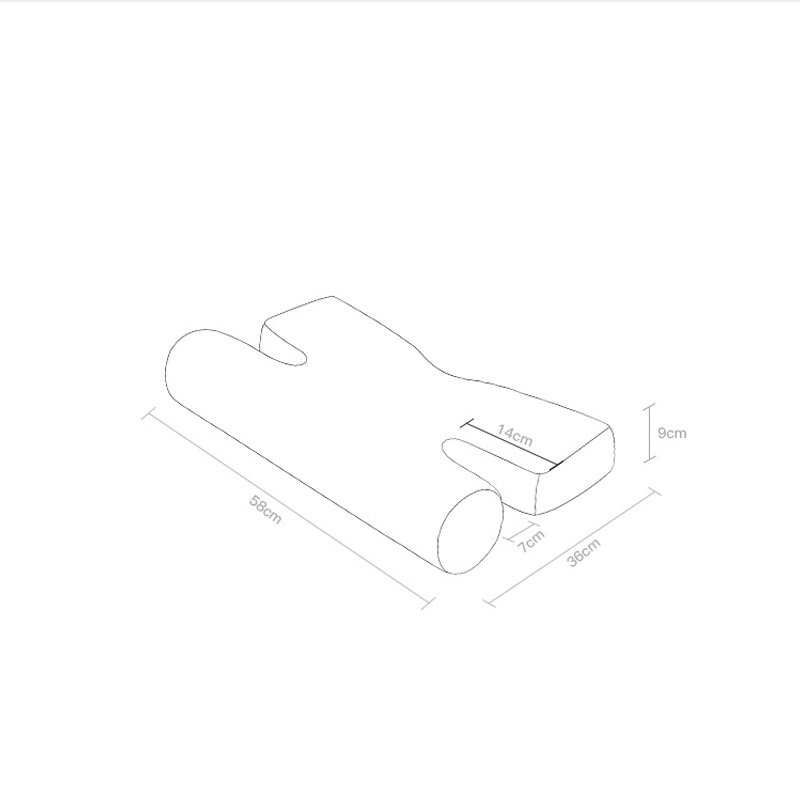 Bravo Bamboo Anti Wrinkle Pillow Side Sleep Cervical Memory Foam Anti Aging PillowDescription: Bravo Bamboo Anti Wrinkle Pillow Side Sleep Cervical Memory Foam Anti Aging Pillow Beauty PillowView Product →
What to look for before you buy a memory foam pillow
Avoiding a bad memory foam pillow is easier when you know what to check. These three checks solve most problems.
- Ask for the density in writing. Any serious factory can state its density, for example 45D or 50D, and its rebound time. If the seller answers "high-quality foam" without a number, the specification is probably low.
- Test the pillow for a full week at home. A pillow that feels soft in a bright shop can feel completely different in a cold bedroom. Evaluate neck comfort in your normal sleeping position, heat buildup, and the smell during the first nights.
- Check the cover and the certification. A zippered, washable cover made from cotton, bamboo, or mesh is a sign of a thoughtful product. For chemical safety, look for low-emission certification such as CertiPUR-US or Oeko-Tex Standard 100.
Even when you are choosing pillows for a hotel, an office break room, or a family member, these checks apply. The specification, not the brand name, is what determines whether the pillow helps or hurts.
Frequently asked questions about memory foam pillows
Are memory foam pillows bad for your neck?
No, not by themselves. Neck pain from a memory foam pillow is almost always caused by the wrong loft for your sleeping position, a collapsed low-density core, or a pillow that is too firm for your body weight. A contoured cervical memory foam pillow that matches your sleeping position can actually relieve neck pain.
How long does a memory foam pillow last?
A quality pillow with 45D or higher density usually keeps its support for 3 to 5 years. Replace it when the center no longer springs back, when a permanent hollow appears, or when you start waking up with stiffness.
Is memory foam toxic or unsafe?
Reputable manufacturers use raw materials that meet low-emission standards, and the finished foam is generally considered safe for normal use. The smell you notice after unpacking comes from trace amounts of manufacturing by-products. Airing the pillow for 24 to 72 hours removes most of the odor. Certifications such as CertiPUR-US confirm that a foam has passed emission testing.
Why does my memory foam pillow get hard in winter?
Memory foam is temperature sensitive. Below roughly 18°C the foam stiffens until it is warmed by body heat. If your bedroom is cold, move the pillow to a warmer room about an hour before sleep, or warm the sleeping surface first.
Can I put a memory foam pillow in the washing machine?
No. The foam core absorbs water and becomes damaged. Wash only the removable cover, and spot clean the foam with a damp cloth. Let the foam dry flat in a ventilated area, away from direct sunlight and heat.
Are memory foam pillows good for side sleepers and stomach sleepers?
Side sleepers usually benefit the most, provided the loft is high enough to fill the ear-to-shoulder gap. Stomach sleepers should choose a low, soft memory foam pillow; a thick, firm one will force the neck into an unnatural angle.
The bottom line: are memory foam pillows worth it?
Memory foam pillows are neither a miracle nor a scam. They are engineered support tools, and their performance depends entirely on the specific foam, shape, and cover.
Choose memory foam if
- You sleep on your side or back
- You want pressure relief around the neck and shoulders
- You prefer a stable pillow that keeps its shape
- You are allergic to dust mites
Consider another material if
- You sleep mainly on your stomach
- You sleep extremely hot even with cooling covers
- You want a pillow you can wash completely
- You prefer an adjustable fill you can add or remove
Set the basic conditions right: choose a density of at least 45D, match the loft and firmness to your sleeping position, and look for a breathable, washable cover. When those conditions are met, memory foam is one of the best pillow choices available. When they are ignored, no brand name or marketing claim will save the pillow.
 predchádzajúci príspevok